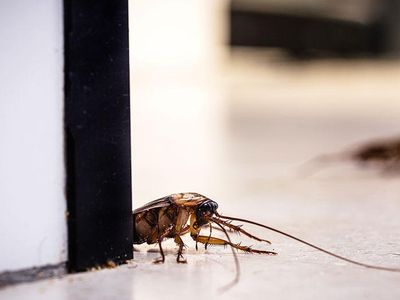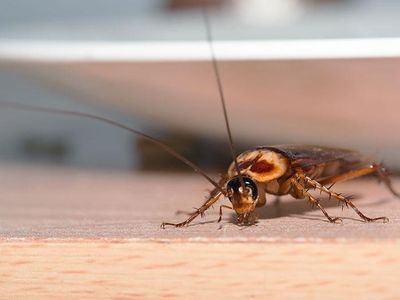
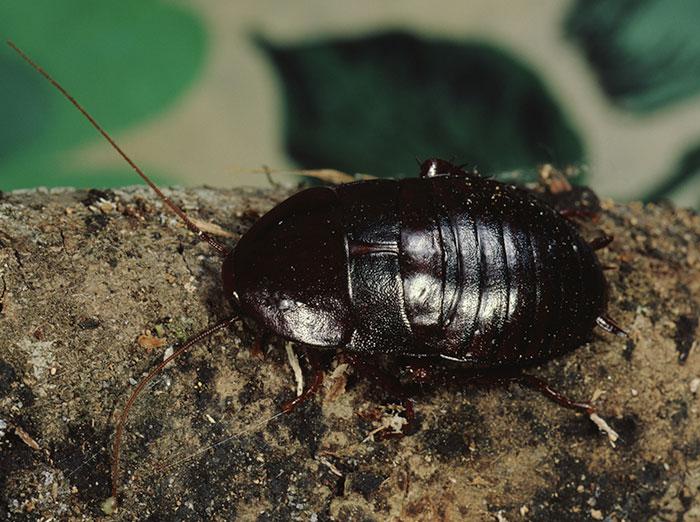
The Oriental cockroach (Blatta orientalis) is the large, shiny black roach many Hampton Roads homeowners call a "water bug." It's a moisture-loving outdoor species that typically enters homes from below — through drains, crawl spaces, and ground-level gaps — rather than being carried in on groceries or other items.
What Do Oriental Cockroaches Look Like?
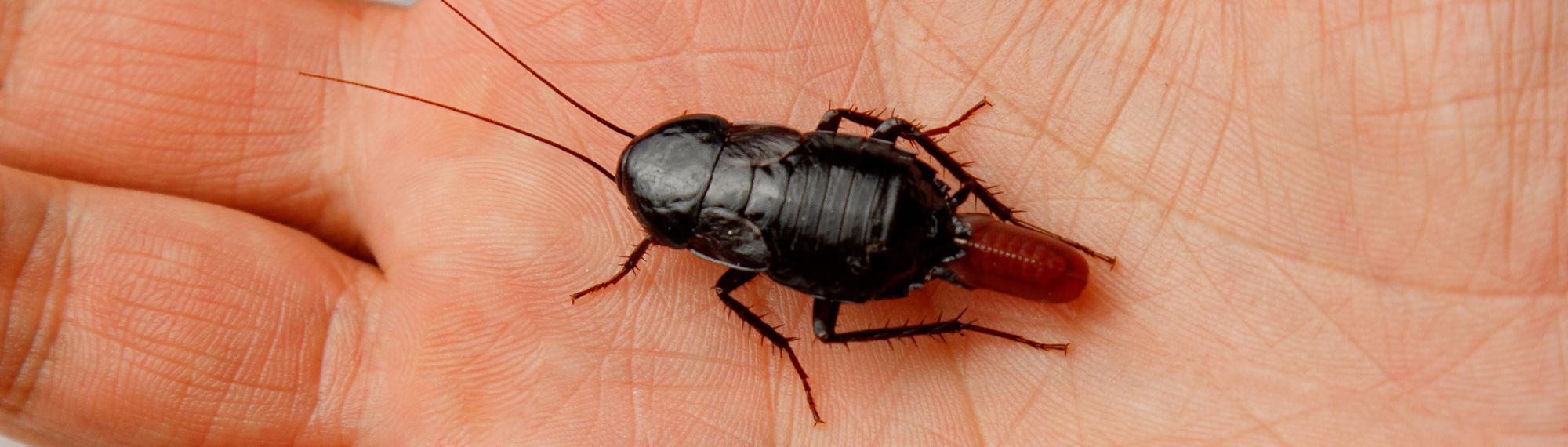
Oriental cockroaches are shiny black to dark reddish-brown, about an inch long, with a smooth, almost beetle-like sheen. Females can reach an inch and a quarter.
Females have small, nonfunctional wing pads and are broader and heavier-bodied. Males have shorter wings that leave part of the abdomen exposed. Oriental cockroaches are generally encountered crawling rather than flying.
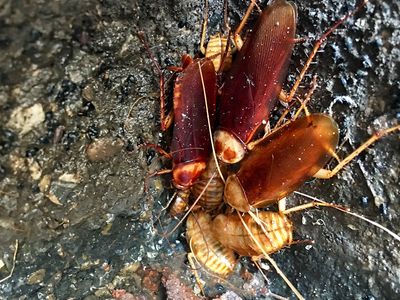
Nymphs resemble smaller adults.
When Are Oriental Cockroaches Most Active?
Oriental cockroaches are most active in Virginia from late spring through midsummer, with adult populations typically peaking in late June and July. Activity declines later in summer and fall. They are considered not active during the coldest months, although some may overwinter in protected areas.
Oriental vs. American Cockroach
Color and size
Oriental cockroaches are shiny black and about an inch long. American cockroaches are larger and reddish-brown, with a pale figure-8 marking behind the head.
Behavior
Oriental cockroaches usually stay at or near floor level and cannot climb smooth surfaces well. American cockroaches are stronger climbers, prefer warmer areas, and may glide or fly in warm conditions.
Is a “Water Bug” the Same as an Oriental Cockroach?
True water bugs are aquatic insects that live in ponds and streams and rarely come indoors. The dark, glossy "water bug" people find in a damp crawl space, garage, or bathroom is often an Oriental cockroach, which earned the nickname because it favors wet, low-lying areas.
Why Oriental Cockroaches Are Common in Hampton Roads
Hampton Roads' low elevation, shallow water table, humid summers, and frequent rainfall create plenty of damp environments where Oriental cockroaches can thrive.
Crawl spaces, storm drains, sewer systems, mulch beds, and other moisture-holding areas around local properties can provide both shelter and routes toward buildings.
Are Oriental Cockroaches Dangerous?
Because Oriental cockroaches frequent sewers, drains, garbage, and decaying organic matter, they can pick up and mechanically spread bacteria and other contaminants. Cockroaches have been associated with food contamination and organisms, including Salmonella.
Their droppings and body parts can also contribute to allergies and trigger asthma symptoms in sensitive people.
Where Oriental Cockroaches Come From and How They Get Inside
Oriental cockroaches live outdoors in cool, damp harborage — leaf litter, mulch, woodpiles, stones, storm drains, and sewers. They commonly enter at or near ground level. Common entry points include:
-
Dry floor-drain traps
A floor drain's U-bend holds water that blocks pests. In a seldom-used laundry, utility, or garage drain, the trap can dry out, leaving an open route through the drainage system. -
Sump pits and ground-level plumbing
Open sump pits and gaps around pipes and utility penetrations connect the damp soil outside to the crawl space or basement. -
Crawl space vents
Vents admit them to the crawl space from outside; they then move up into the living area through gaps.
Unlike German cockroaches, they are not typically carried in with food or groceries.
Where Will I Find Oriental Cockroaches Indoors?
Oriental roaches strongly prefer damp areas and cannot climb smooth surfaces well.
Common places to see them include:
- Crawl spaces and basements in homes that have one
- Utility rooms and laundry rooms
- Garages — especially near floor drains
- Under and behind appliances such as water heaters and washing machines
- Around sinks, toilets, and exposed pipes on the ground floor
- Along baseboards at floor level, where they travel
Signs of an Oriental Cockroach Infestation
Beyond the roaches themselves, other signs of a problem include:
- A noticeable musty or unpleasant odor when populations become larger
- Egg capsules that are brown to dark reddish-brown and about 3/8 inch long, tucked into sheltered locations
- Small, dark droppings along baseboards or near drains
I Only Saw One — Do I Have an Infestation?
One Oriental cockroach does not necessarily mean you have an indoor infestation. These roaches sometimes wander inside from outdoor or below-ground areas. Repeated sightings, especially around the same damp location, are more suggestive of an established problem nearby.
See our guide on what it means when you see a single cockroach.
How Do I Get Rid of Oriental Cockroaches?
Oriental cockroaches are nocturnal, hide in difficult-to-reach damp areas, and may continue entering from outdoor or below-ground sources if entry points and moisture problems are not addressed. Effective control combines professional treatment with sealing entry points.
Getem Services has treated cockroaches since 1922; we offer residential and commercial pest control targeting Oriental cockroaches across Hampton Roads.
How Can I Prevent an Oriental Roach Infestation?
- Keep drain traps sealed
Run water down seldom-used floor drains, or fit drains with gasketed covers. - Close below-grade entry points
Caulk or foam gaps around pipes, utility penetrations, and sewer cleanouts, and seal foundation cracks near grade. - Control crawl-space moisture
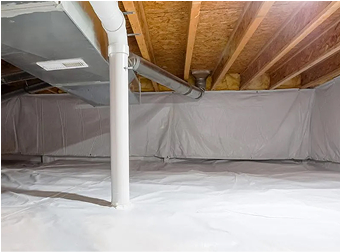
Repair leaks and address excess crawl-space moisture with appropriate moisture-control measures, such as vapor barriers or encapsulation — see our moisture control services. - Reduce outdoor harborage
Pull mulch back from the foundation and clear leaf litter, woodpiles, and debris. - Direct water away from the house
Clean gutters, extend downspouts, and grade soil to slope away from the foundation — important where the water table is high, and rain is frequent.


Additional Services




Get Help Now!
Request Your Free Quote