It's Not Just Lyme: Tick-Borne Diseases Spreading Across Hampton Roads
Most homeowners across Hampton Roads have heard of Lyme disease. It's the tick-borne illness that gets the most attention, and for good reason. But lately, the team at Getem Services has been fielding more questions about ticks than ever — and the concerns go well beyond Lyme.
A report from WHRO, Hampton Roads' local public radio station, highlighted a trend that's getting harder to ignore: babesiosis, a parasitic infection similar to malaria, has been confirmed in Virginia — including cases that were contracted right here in the state. Researchers at Old Dominion University's Tick Research Team have documented the blacklegged ticks responsible for spreading it in parts of Hampton Roads, including Portsmouth and Chesapeake.
For homeowners who spend time in their yards, walk their dogs along tree-lined neighborhoods, or let their kids play outside, this is worth paying attention to.

The Threats Going Beyond Lyme
Lyme disease remains the most common tick-borne illness in the country, with an estimated 476,000 Americans treated for it every year. But here in Southeast Virginia, homeowners are facing a growing list of tick-borne threats that don't always make the news.
Babesiosis is one of the newer concerns showing up in Virginia. Unlike Lyme, which is caused by bacteria, babesiosis comes from a microscopic parasite that infects red blood cells. It doesn't respond to the antibiotics used to treat Lyme disease, and symptoms can range from mild flu-like aches to serious complications — especially in older adults or those with a weakened immune system. Researchers say babesiosis appears to be following the same expansion pattern as Lyme disease in the Mid-Atlantic over the past two decades.
Alpha-gal syndrome is another one that catches people off guard. A bite from a lone star tick can trigger a delayed allergic reaction to red meat. That's especially concerning in Hampton Roads, where researchers estimate lone star ticks make up roughly 90% of the local tick population. Symptoms often don't appear until hours after eating, making it difficult to connect the dots back to a tick bite.
And then there are the diseases that have been present in Virginia for years but still catch homeowners off guard: Rocky Mountain spotted fever, ehrlichiosis, and anaplasmosis. Each one is carried by tick species found right here in Hampton Roads.
Why Are There So Many Ticks in Hampton Roads?
Hampton Roads sits at the intersection of everything that ticks need to thrive. The region's mix of wooded areas, mature landscaping, and mild weather creates ideal conditions for ticks. Properties that back up to tree lines, parks, or natural areas tend to experience the highest tick activity.
White-tailed deer are a big part of the equation. As deer move through neighborhoods, they can introduce ticks into yards, gardens, and the shaded edges of properties.
Hampton Roads' mild winters make things worse. While many pests slow down when temperatures drop, blacklegged ticks remain active through the colder months. That means there's no true off-season for tick exposure in this part of Virginia. Our technicians see tick activity on properties year-round, though the heaviest pressure runs from spring through late fall.
What Professional Tick Treatment Looks Like
Checking yourself for ticks after being outside and keeping your lawn tidy are smart habits. But when ticks are already established on a property, those steps alone won't solve the problem. That's where Getem Services comes in.
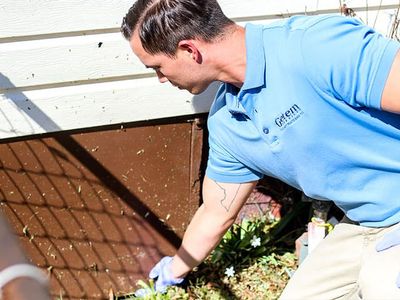
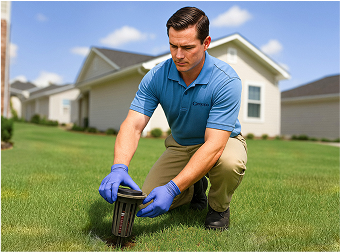
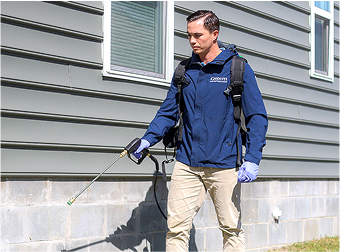
Our seasonal program targets ticks — along with mosquitoes and fleas — where they actually live on your property. Our technicians apply misting treatments every three weeks from March through September, focusing on the zones where ticks wait for a host: fence lines, transitional areas where your lawn meets wooded edges, under decks, overgrown vegetation, and shaded spots along property borders.
This isn't a one-and-done treatment. Ticks reproduce throughout the warmer months, and new ones constantly move in from surrounding areas on deer, rodents, and other wildlife. A regular treatment schedule throughout the season keeps the population knocked back so your family and pets can actually enjoy being outside.
If you've been finding ticks on your kids, your pets, or yourself after spending time in your own backyard, that's usually a sign the problem is already bigger than what personal prevention can handle. Give us a call, and we'll walk through what a seasonal program for your property looks like.
Tick Protection Takes More Than Repellent and Yard Work
Tick repellent protects you while you're wearing it, and good yard maintenance can help reduce tick habitat. But ticks don't only live in tall grass. They also harbor in shrubs, mulch beds, leaf litter, and shaded areas along property borders. Because wildlife regularly moves through Hampton Roads neighborhoods, new ticks can continually be introduced to a property throughout the season.
A professional treatment program works because it targets ticks in the specific spots where they harbor, on a schedule that keeps pace with their life cycle. It's the difference between reacting to individual ticks and reducing the population across your entire yard.
Tick Questions From Hampton Roads Homeowners
Can a single tick carry more than one disease?
Yes. One tick can carry multiple pathogens at once, meaning a single bite could lead to more than one infection. Co-infections can make symptoms harder to pin down and treat.
Does tick activity ever slow down in Hampton Roads?
Yes, but it doesn't stop. Tick activity is usually highest from spring through fall, but Hampton Roads' mild winters allow ticks to remain active throughout much of the year.
Does Getem's outdoor treatment affect flowering plants or pollinators?
Our technicians are trained to avoid treating flowering plants and waterways. Misting treatments are directed at the shaded, vegetated areas where ticks harbor — not the parts of your yard that attract bees and butterflies.
Can my pets get tick-borne diseases, too?
Absolutely. Dogs are especially vulnerable to Lyme disease, ehrlichiosis, and anaplasmosis. Veterinarians in Hampton Roads regularly diagnose tick-borne illnesses in pets, which is another reason reducing the tick population on your property matters.
Protect Your Family From Biting Ticks
Tick-borne diseases are expanding across Hampton Roads, and the list of threats is longer than most homeowners realize. The team at Getem Services has been protecting families in Norfolk, Virginia Beach, Chesapeake, and throughout Hampton Roads since 1922 — and we're here to help you take control of your yard.
Request a free quote or call us to learn more about our seasonal mosquito, flea, and tick control.


Additional Services




Get Help Now!
Request Your Free Quote